
Yes
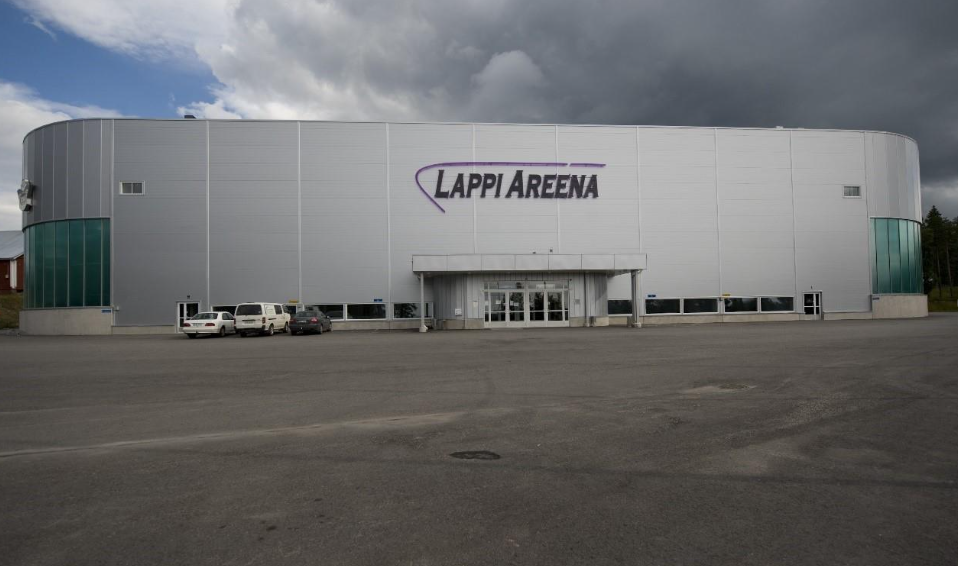
Lappi Areena is a multi-purpose indoor arena in Rovaniemi, Finland which hold concerts, trade fairs and sporting events particularly ice hockey. The arena was built in 2003 and has a capacity of 4780 people for concerts and 3500 for ice hockey matches. Lappi Areena and Santasport Lapland Sports Institute together form an entity that offers centrally located accommodation and restaurant services, spa services, fairs, concerts, graduation parties, meetings, numerous different sports services, and top expertise in sports, exercise, and well-being for various events.
3600 m2 is the estimated size of the ice hockey rinks
The Rovaniemi Lappi-Areena used over 2.5 million kilowatt hours of electricity last year. Electricity cost Lappi-Areena 140,000 euros last year, thanks to cheap electricity. The price of the Rovaniemi City Group’s electricity contract was about five cents per kilowatt-hour. Electricity consumption dropped by over 400,000 kilowatt hours per year simply by changing the lighting to LED bulbs. That's an absolutely amazing saving, one of the biggest they have made as a sports facility.
Technical innovation
Reduced electricity consumption
Reduced payment for electricity.
Inspirational effect for implementing other sustainability measures
High upfront costs
| Indicator | Value |
|---|---|
| Visits per year | 150,000. This is an estimation, as a precise calculation can’t be provided. |
| Water Consumption (liters/use) | |
| Primary energy Usage per year (kWh/use) | 14 |
| Estimation of Water Saving (%) | |
| Estimation of Energy Saving (%) | Low (below 30%) |
| Estimation Waste and Resource Savings (%) |
The yearly energy use was 2.5 million kilowatt hours for last year. With the LED bulbs it dropped by 16% (400 000 kilowatt hours) for one year to 2 100 000 kilowatt hours. The sport facility has a special contract with the city of Rovaniemi for lower than usual price of the electricity. The price of the Rovaniemi City Group’s electricity contract was about five cents per kilowatt-hour.
The intention is to reuse the water that melts from ice in the future, which will save clean water. The loose material is scraped off the ice, dumped into a melting pit, and the water is then recycled over and over again. This reduces water consumption considerably. In addition, the waste heat from refrigeration machines will be used more efficiently than at present. This will enable almost all of the heating energy needed in the hall to be produced, according to a study conducted by Lapland University of Applied Sciences.

Last update: March 20, 2026, 11:37 a.m.